Loading...
Serving Norwalk, CA and surrounding areas. (562) 539-0405
Serving Norwalk, CA and surrounding areas. (562) 539-0405
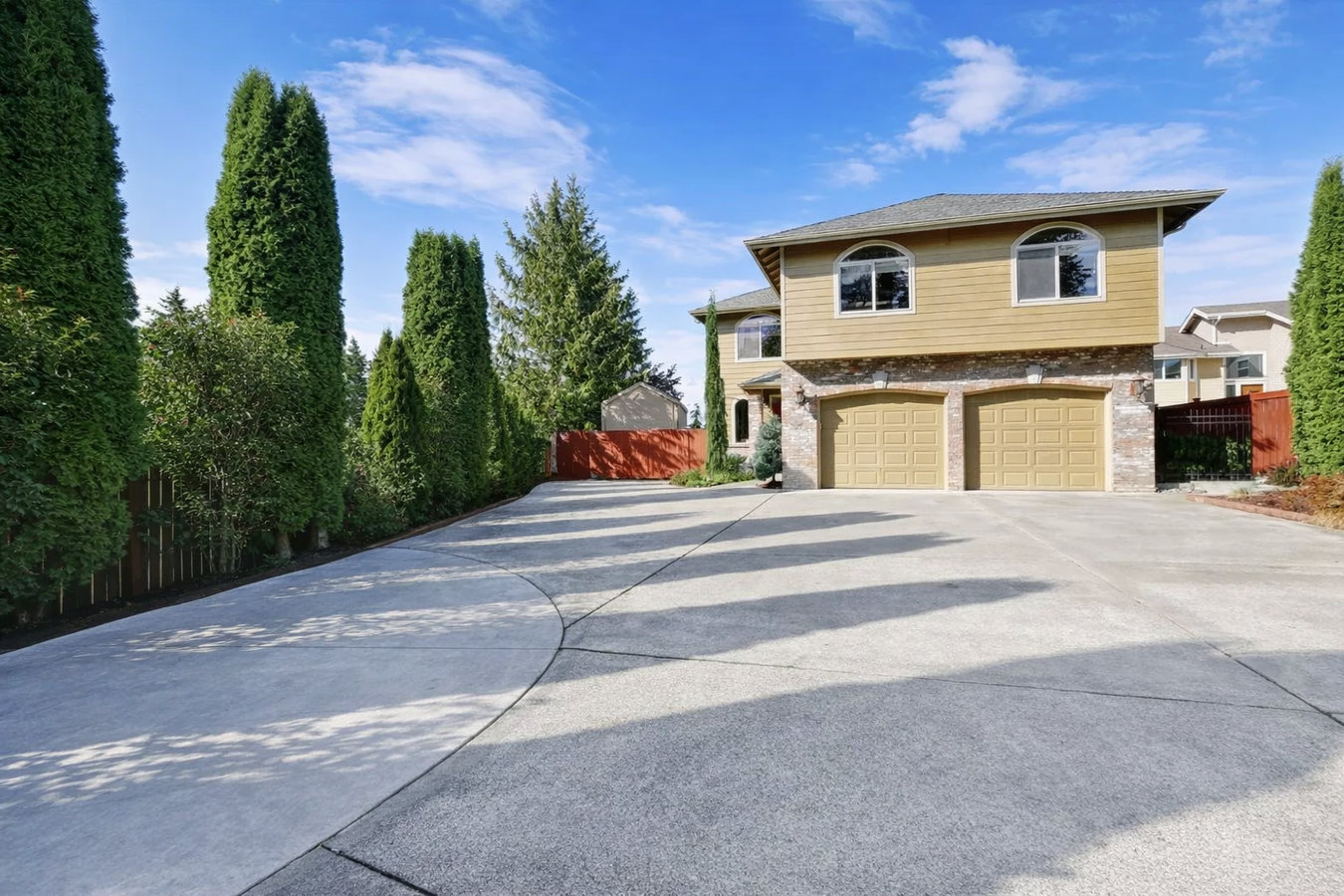
Norwalk Concrete Company provides concrete contractor services in Lakewood, CA - including driveway replacement, patio construction, and sidewalk repair on the city's 1950s-era homes - and we have completed projects on the small-lot ranch houses that line nearly every street here. We respond to every inquiry within one business day.
Lakewood homes were built between 1950 and 1954, which means most original concrete driveways are now past 70 years old - well beyond any reasonable service life. Mature trees planted decades ago have pushed roots beneath many of these slabs, and the clay-heavy soil has been moving underneath them through every rainy season since. We remove what is there, address what is in the ground, and pour a reinforced replacement built to handle these conditions. Learn more about our concrete driveway building services.
Lakewood lots are modest in size - typically 5,000 to 6,000 square feet - so a patio layout that uses the space well matters more here than in a city with larger yards. Many homes still have the original backyard slab from the early 1950s, if they have one at all. We design and pour patios that fit the available space, drain correctly toward the yard, and hold up under Southern California's year-round outdoor use and UV exposure.
The mature trees that give Lakewood's streets their character also push roots under sidewalk panels and front walkways, lifting sections and creating trip hazards. After 70-plus years, root damage is one of the most common concrete problems on these properties. We remove compromised panels, address the root issue where possible, and pour replacements that match the surrounding finish so the new work blends in.
Lakewood's streets are lined with similar homes on similar lots, so exterior details carry more weight than they might in a less uniform neighborhood. A stamped or colored concrete driveway or front walkway gives a 1950s ranch home a cleaner, more finished look without the ongoing maintenance of wood or the higher cost of individual stone pavers. It is one of the most cost-effective curb appeal improvements available on these properties.
Low front entry steps on Lakewood's ranch homes have been settling and cracking for decades, and many have been patched multiple times. At some point the patches stop holding - the underlying slab has shifted too far. We rebuild entry steps to current standards with the correct reinforcement, proper footing depth, and a slope that sheds water away from the front door rather than pooling at the threshold.
Garage floors in Lakewood's 1950s homes were poured thin and without modern reinforcement standards. After 70-plus years of vehicle weight, soil movement, and root intrusion, many are cracked, uneven, and difficult to keep clean. We demo the old slab, properly prepare the base, and pour a reinforced floor that handles vehicle weight without breaking apart in the first few years.
Lakewood was built almost entirely between 1950 and 1954 - one of the largest planned housing tracts ever constructed in the United States, with nearly 17,500 homes completed in just a few years. That compressed building timeline means the city has an unusually uniform housing stock: almost every residential property is roughly the same age, built to the same general specifications, on a small lot with a single-story ranch layout. For a concrete contractor, this creates a predictable and demanding set of conditions. Any original concrete flatwork on these properties is now more than 70 years old - past the typical 30-to-50 year service life for a well-built residential slab, and well past the lifespan of a slab that was poured quickly during a rapid construction cycle.
The soil and climate add to the challenge. The Los Angeles Basin, including Lakewood, sits on clay-heavy soils that absorb water and swell in wet winters, then dry out and shrink each summer. That cycle repeats every year and puts steady stress on concrete slabs from underneath. The mature trees planted alongside every street when these homes were new are now large enough to push roots beneath driveways, sidewalks, and patios - creating uplift that cracks concrete from below rather than from the top down. Santa Ana wind events each fall and winter can also expose roofing and exterior damage that, left unaddressed, allows water to reach concrete and accelerate deterioration. A contractor working in Lakewood needs to understand all of these factors, not just the pour itself.
We pull permits through the City of Lakewood Building and Safety Division for projects that require one. Lakewood incorporated as its own city in 1954 and has maintained its own municipal services since - it is not part of Long Beach, despite sharing a border, and the permit process here runs through Lakewood's city offices rather than Los Angeles County. We have worked on the city's standardized ranch-style properties and know the construction patterns well: thin original slabs, minimal reinforcement by modern standards, and tree root systems that have had seven decades to work their way beneath flatwork.
Lakewood is bordered by Long Beach to the west and south, Bellflower to the east, and Norwalk and Cerritos to the northeast. The city is fully built out - there is no undeveloped land left - and every street is lined with the same generation of homes. Lakewood Center, one of the first large regional shopping malls in the United States, is a central landmark most residents know well. Lakewood Park, the city's main gathering space with sports fields and a community center, sits near the middle of the city and gives the neighborhoods around it a recognizable character.
We also serve nearby Whittier and Downey, both of which have similar mid-century housing stock and the same clay soil conditions that make proper base preparation essential. If you are in either of those cities, the same crew and same process applies.
Reach out by phone or through the contact form and we will respond within one business day. We gather basic details about the project, then schedule an in-person site visit to your Lakewood property before any pricing is discussed.
We measure the work area, check the condition of the existing slab, look at drainage and access, and discuss your goals. You receive a written quote that separates demolition, base prep, reinforcement, the pour, and permit fees - so you know what each part of the job costs before you agree to anything.
We apply for any required permit through the City of Lakewood on your behalf. Permit processing typically takes one to two weeks. Once approved, we set your start date and give you a clear written timeline, including when the finished surface will be ready for use again.
Demolition and base preparation happen on day one; the pour and finish on day two. A city inspector reviews the completed work, and once it passes, we do a final walkthrough with you covering care instructions, curing timelines, and any follow-up needed.
We serve Lakewood and the surrounding cities. We come to your property before quoting - no guesswork pricing over the phone for 70-year-old slabs that need a closer look.
(562) 539-0405Lakewood is a residential city in Los Angeles County with about 80,000 residents and a story unlike most of its neighbors. The city was developed almost entirely between 1950 and 1954 as one of the largest planned housing tracts in American history - nearly 17,500 homes built in just a few years on what had previously been farmland. The result is a city where nearly every street looks similar: small lots, single-story ranch homes, attached garages, and mature trees that were planted as saplings when the houses were new. About 60 percent of those homes are owner-occupied, which is above average for the Los Angeles metro area. You can read more about the city's history on the Lakewood, California Wikipedia page.
Lakewood borders Long Beach to the west and south, Bellflower to the east, and Cerritos and Norwalk to the northeast. The city is fully built out, and it incorporated in 1954 under the original "Lakewood Plan" - a model where the city contracts with Los Angeles County for many of its public services, an approach that has since been copied by dozens of California cities. Lakewood Center, one of the first large regional shopping malls built in the United States, opened in 1952 and remains a central landmark. Nearby Whittier shares a similar mid-century residential character and many of the same concrete issues that come with aging 1950s and 1960s housing stock.
Expert driveway installation using high-quality concrete for lasting curb appeal.
Learn moreCustom concrete patios designed to expand your outdoor living space.
Learn moreDecorative stamped finishes that replicate stone, brick, and tile patterns.
Learn moreDurable, code-compliant concrete sidewalks for residential and commercial properties.
Learn moreStructural retaining walls that control erosion and define landscape boundaries.
Learn moreProfessional concrete floor installation for homes, warehouses, and commercial spaces.
Learn moreSlip-resistant, attractive concrete pool decks built for safety and style.
Learn moreCustom concrete steps that improve access and boost property appearance.
Learn moreSolid concrete slab foundations that provide a stable base for any structure.
Learn moreComplete foundation installation services for residential and commercial builds.
Learn moreHeavy-duty concrete parking lots designed for high-traffic durability.
Learn morePrecise concrete footings that support walls, posts, and structural loads.
Learn moreServing these cities and communities.
We work throughout Lakewood and the surrounding cities. Call us or fill out the form and we will get back to you within one business day with a written quote.