Loading...
Serving Norwalk, CA and surrounding areas. (562) 539-0405
Serving Norwalk, CA and surrounding areas. (562) 539-0405
Before any addition, ADU, or structure goes up, the footing underneath it decides whether it stays level and intact for decades or starts shifting inside five years.
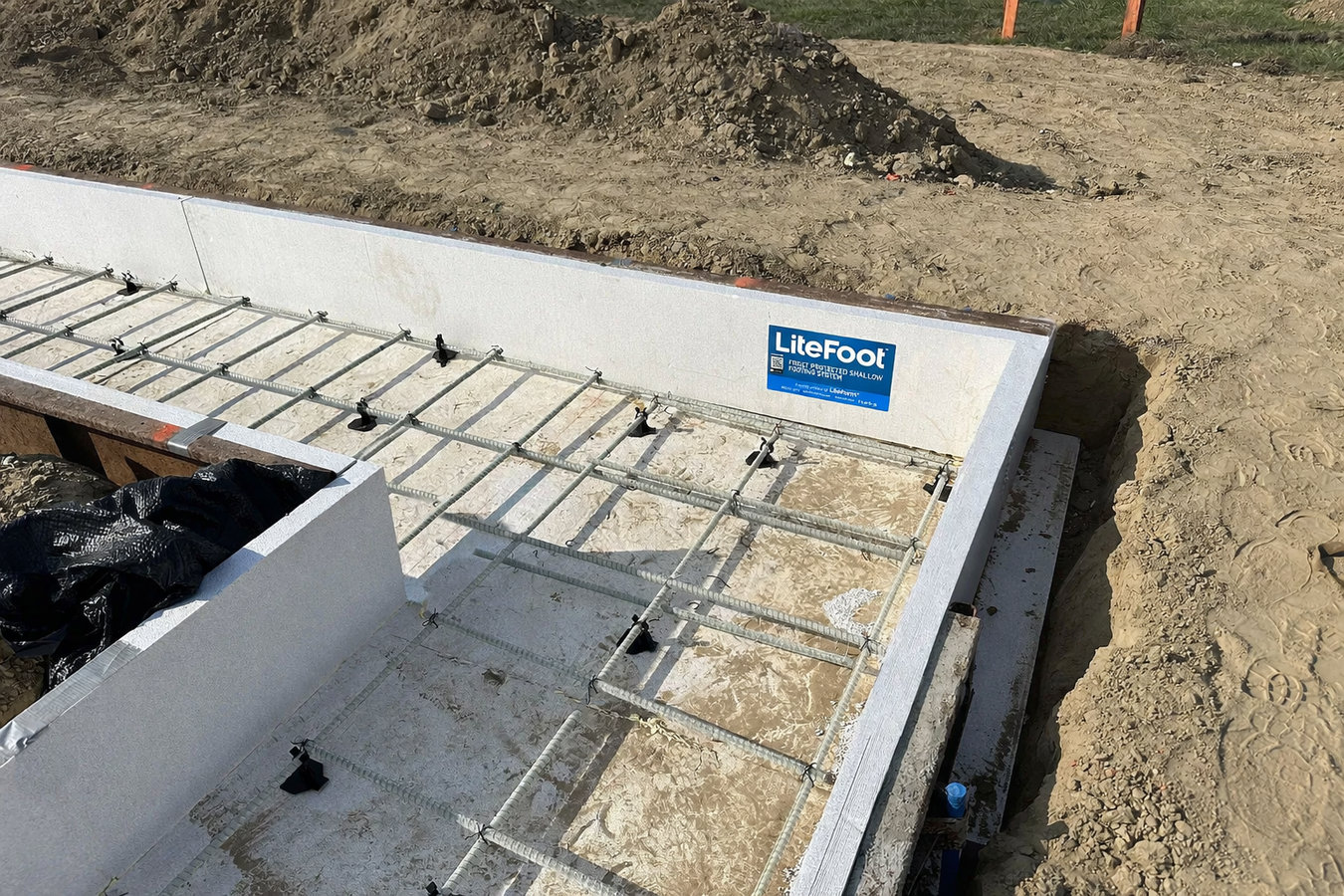
Concrete footings in Norwalk are underground reinforced concrete bases built to support a structure above - a room addition, ADU, garage, or covered patio - the crew digs to the required depth, places steel reinforcement, gets a county pre-pour inspection, then pours and cures the concrete, with the full permitted process typically running six to eight weeks from first contact to final sign-off.
Most homeowners who call us are in the early planning stages of an addition or a detached structure and have just realized that the footing is the first step they need to solve before anything else can be designed. In Norwalk, where the soil is clay-heavy and the seismic requirements are real, getting the footing right at the start is far less expensive than repairing a structure that moved because the footing beneath it was undersized or improperly reinforced. If you are also thinking about a full foundation installation, footing work is often coordinated alongside it for larger new-construction or addition projects.
Every footing project we do in Norwalk is permitted through the LA County Department of Public Works. We handle the application and coordinate both the pre-pour and final inspections so you are not navigating the county process on your own.
Some of these signs show up suddenly. Others have been building slowly for years.
Cracks running from the corners of door frames or windows are often the first visible sign that part of your foundation or footing is moving. In Norwalk, where clay soils shift with wet and dry seasons, this kind of movement is more common than many homeowners realize. It does not always mean a catastrophic problem, but it does mean the footing situation below deserves a professional look.
When a footing shifts, the structure above shifts too - and that shows up first in doors and windows that no longer fit their frames. If a door that used to swing freely now drags on the floor, or a window has become hard to open, pay attention. This symptom is especially common in Norwalk's older homes after a wet winter followed by a dry summer.
Any new structure attached to your home - or even a large freestanding one like a garage or accessory dwelling unit - needs its own footing before anything else can be built. In Norwalk, where ADU construction has increased significantly in recent years, many homeowners discover that footing work is the first step they did not fully plan for. Getting a footing assessment early saves time and surprises later.
If you can see a gap opening between your house and an attached garage, porch, or addition - even a small one - that is a sign the two structures are moving independently. This often means one of them is sitting on a footing that has shifted or settled. Left alone, these gaps tend to grow.
We install concrete footings for the full range of residential and small commercial structures in Norwalk: room additions, accessory dwelling units, detached garages, covered patios, pergolas, carports, and freestanding storage structures. Every footing we build is designed for local soil conditions - the clay-heavy ground in this part of LA County requires specific depth, width, and reinforcement decisions that a generic spec will not capture. We assess your site before we give you a price so the number you agree to reflects what is actually there, not a best guess from a phone call.
Steel reinforcement is standard on every project, sized for the seismic requirements that apply in Norwalk. We also handle foundation raising when an existing structure has settled and needs to be brought back to level before new footing work begins. The LA County permit process - including the pre-pour inspection and final sign-off - is managed entirely by our team. You will not be left chasing the county on your own.
Suits homeowners expanding living space with a bedroom, bathroom, or family room addition.
Suits homeowners building a detached or attached accessory dwelling unit for rental income or family use.
Suits properties replacing an old garage structure or building a new one on a cleared lot.
Suits homeowners adding a permanent covered outdoor structure that requires anchored post bases.
Suits new residential structures that need a full perimeter base before slab or framing begins.
Suits decks, pergolas, and light structures where point-load support is more appropriate than a continuous footing.
Two conditions define footing work in Norwalk above everything else: clay soils and seismic requirements. The clay-heavy soil throughout the Los Angeles Basin expands when it absorbs rain and shrinks in the dry months - a cycle that puts upward and lateral pressure on footings year after year. Getting the depth and reinforcement right from the start is what separates a footing that holds steady for 30 years from one that starts cracking walls and sticking doors within a few wet seasons. We assess every site before we design the footing, and our base estimates account for local soil conditions rather than treating every lot the same. Norwalk's housing stock - most of it built in the 1950s through 1970s - also means that addition projects often require evaluating what the original footing can support before new work is designed on top of it.
The permit side is just as important. Footing permits in Norwalk run through the LA County Department of Public Works, and the pre-pour inspection is a required step - the county inspector has to approve the steel placement before the concrete is poured. We have handled this process for homeowners throughout Norwalk and nearby Whittier and West Covina, and we can give you a realistic timeline for the permit phase so you are not caught off guard by how long review takes. ADU footing projects, which have become common across Norwalk, carry additional review steps that we are experienced in navigating.
We come to your property, look at where the footing needs to go, and assess the soil conditions. This visit is what makes our estimate reliable - footing work is hard to price accurately from a phone call. We reply within one business day to schedule.
We submit the permit application to the LA County Department of Public Works on your behalf and give you a realistic written timeline - including the review period. Plan review can take two to four weeks for a standard footing project.
Once the permit is approved, the crew digs the trench to the required depth, places and ties the steel reinforcement, and the county inspector reviews the setup before any concrete is poured. That inspection step is required and protects you.
The concrete is poured, typically a few hours for a standard residential footing. After about a week the footing is firm enough to build on, and after 28 days it has reached full strength. The county does a final inspection and sign-off before you move to the next phase.
We assess your site, manage the LA County permit process, and handle the county inspection - so your project starts on a foundation that will not move. Licensed, bonded, and locally experienced.
(562) 539-0405Footing permits in Norwalk go through the LA County Department of Public Works, and both the pre-pour inspection and the final sign-off require county coordination. We handle every step - application, scheduling, and inspection follow-through - so you are not left navigating the county process independently. Unpermitted footing work can derail a real estate transaction, and that risk is not worth taking.
Norwalk is in one of the most seismically active parts of the country, and every footing we install includes the steel reinforcement that California's building code requires for this region. The county inspector specifically checks steel placement before the pour. This is non-negotiable code compliance, and it is also what protects your structure when the ground shakes.
Older Norwalk homes - most built in the 1950s through 1970s - can hide surprises underground: old utility lines, unexpected soil conditions, or original footing work built to outdated standards. We assess your site before we give you a price, so the number you agree to is based on what is actually there. That is how we avoid the low-bid-that-balloons problem.
ADU projects have increased significantly in Norwalk, and footing work for an ADU involves a more involved permit process than a standard addition. We have navigated that review process across Norwalk and 11 surrounding cities and can give you accurate timeline and cost expectations before you commit to a full project plan.
Every footing we install is permitted, inspected, and built with the soil and seismic conditions of this specific area in mind. When you move forward with us, the price you agree to is the price the job ends at.
Footing standards and seismic requirements are covered by the American Concrete Institute. You can verify contractor license status on the California Contractors State License Board.
Lifting and restoring foundations that have settled or shifted - work that often begins with re-establishing the footing below.
Learn moreFull foundation systems for new construction and major additions, built on the same seismic-reinforcement principles as our footing work.
Learn moreADU and addition projects in Norwalk involve county permit review that adds weeks to the timeline - contact us now so the permit process is not the thing that delays your build.
We install concrete footings throughout Norwalk and all surrounding cities in Los Angeles County.