Loading...
Serving Norwalk, CA and surrounding areas. (562) 539-0405
Serving Norwalk, CA and surrounding areas. (562) 539-0405
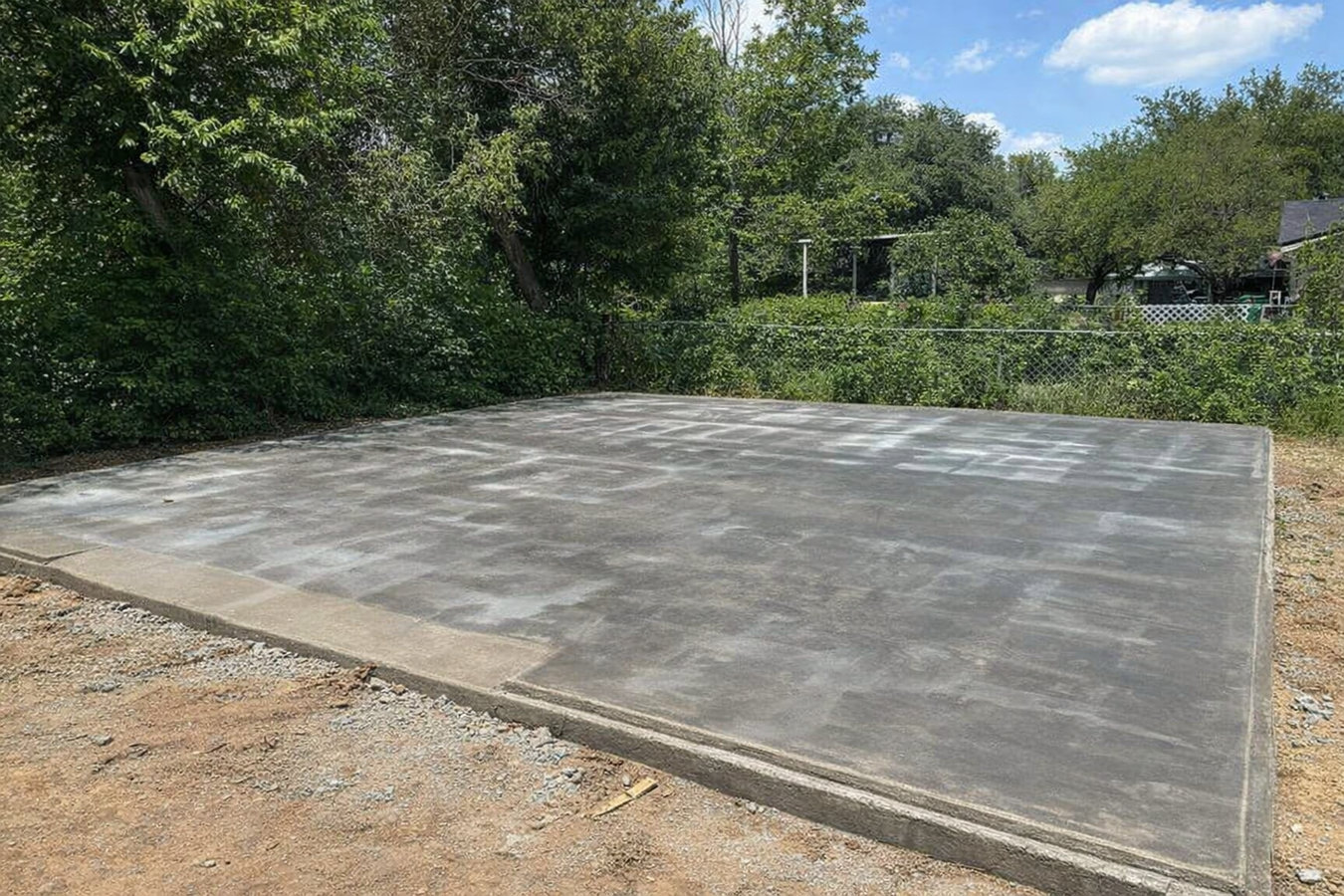
Clay soils shift, summers run hot, and city permits are required - we handle all of it so your ADU or addition starts on solid ground.
Slab foundation building in Norwalk means pouring a single reinforced concrete pad directly on prepared ground that becomes both the floor and the structural base of your home or addition - most residential projects take three to seven days of active work, plus one to three weeks for permits and a 28-day curing period.
If you are planning an ADU, a room addition, or starting fresh on a vacant lot in Norwalk, a properly built slab is the required first step. The clay soils common across southeast Los Angeles County move with the seasons, and a slab that was not designed for that movement will show cracks within a few years. For related work above grade, see our concrete steps construction service.
We pull the permit, schedule every city inspection, and do not pour until the City of Norwalk Building and Safety Division has signed off on the steel layout. That means no surprises at closing, no unpermitted work in your records, and a foundation that is documented and defensible.
Some signs are obvious. Others show up slowly over months. Here are four worth knowing.
If you are adding a room, garage conversion, or accessory dwelling unit to your Norwalk property, you almost certainly need a new slab. California's ADU laws have made these additions extremely common across southeast LA, and a properly permitted slab is the required starting point for any new livable space.
Small hairline cracks in concrete are normal. But cracks wider than about a quarter-inch, diagonal cracks from the corners of doorways, or cracks where one side sits higher than the other point to uneven movement in the slab. In Norwalk, this kind of damage is often tied to the clay soils expanding and contracting through the wet and dry seasons.
When a slab shifts, the walls and door frames above it shift too. If doors that once swung freely now stick or fail to latch, or if gaps are forming at the tops of door frames, the foundation below may be moving. Catching this early is almost always less expensive than waiting until the damage becomes structural.
If floors feel damp, you see a white chalky residue on the concrete, or you notice a musty smell at floor level, the moisture barrier under your slab may have failed or was never installed. This is more common in older Norwalk homes built before moisture barriers were standard. A contractor can assess whether the issue can be treated at the surface or requires a more significant repair.
We pour residential and light commercial slabs for new construction, ADUs, room additions, garage conversions, and standalone structures throughout Norwalk and the surrounding southeast Los Angeles area. Every project starts with site prep - grading, soil compaction, gravel placement, and a plastic moisture barrier - before any forms or steel go in. We then tie the steel reinforcement to the spec required by Norwalk's seismic zone, order the permit inspection, and pour only after it passes. For structural projects requiring deep footings below the slab, see our concrete footings service.
For additions tied to an older home, we handle the connection between the new slab and the existing structure - a step that requires care on Norwalk's postwar housing stock and one that inspectors look at closely. Where a project needs both a slab and a full structural foundation installation, we scope the work together so you are not coordinating two separate contractors. All pours include a curing plan, and during summer months we schedule early-morning pours and use curing compounds or wet burlap to slow surface drying in the Norwalk heat.
Best for homeowners adding livable space to an existing Norwalk property under California's ADU laws.
Best for vacant lots or fully demolished sites where the entire foundation is being built from the ground up.
Best for converting an attached or detached garage into a bedroom, office, or rental unit.
Best for workshops, sheds, outdoor kitchens, and other outbuildings that need a level, permanent base.
Norwalk sits on clay-heavy soils that absorb water during the winter rainy season and shrink back during the long dry summers. That constant movement is the primary reason slab foundations in this part of Los Angeles County develop cracks and uneven settling over time. A contractor who does not account for local soil behavior at the design stage - through proper compaction, moisture barriers, and steel reinforcement spacing - is setting up the slab to fail. Homeowners in Downey and Whittier face the same soil conditions, and we build to the same standards across all the cities we serve.
The Norwalk area also sits in a high seismic zone, and California's building code requires that slab foundations be designed to resist lateral forces from ground shaking - not just the vertical load of the building above. This means specific steel placement and depth requirements that the City of Norwalk inspects before the concrete is poured. Norwalk has a large number of homes built in the 1950s through 1970s, and many ADU projects in these older neighborhoods require the new slab to tie into an existing structure - work that is more complex than a standalone pour and that we handle regularly.
Here is what the process looks like from your first call to a completed, inspected slab.
We come out to your property at no charge, look at the site, take measurements, and ask about your plans. You will get a written estimate - not a phone guess - within a day or two of that visit.
We file the permit with the City of Norwalk Building and Safety Division and handle the paperwork. Plan for one to three weeks for approval on a straightforward residential project. We keep you updated throughout.
Once the permit clears, we excavate, compact, and lay the gravel, moisture barrier, and steel. A city inspector reviews everything before we order the concrete - no pour happens without that sign-off.
The pour happens in a single day. We protect the surface during curing, and the city conducts a final inspection to close the permit. You receive all permit records and inspection documentation when the job is done.
Free estimate. No permit guesswork. We handle every inspection step for you.
(562) 539-0405Southeast LA clay soils behave differently from sandy or loamy ground, and our soil compaction process accounts for that. Every slab we pour in Norwalk includes a multi-layer compaction, gravel, and moisture barrier sequence designed for the actual ground conditions here - not a generic procedure.
We have worked with the City of Norwalk Building and Safety Division on residential slab permits many times. We know the process, we handle the paperwork, and we schedule every required inspection without you having to track it down. You will have a complete permit record when the job is done.
Norwalk sits near the Whittier Narrows fault, and California's building code sets specific steel reinforcement requirements for foundations in this seismic zone. Our steel placement is designed to meet those requirements and is reviewed by a city inspector before the concrete is ever ordered.
Norwalk has seen a significant increase in ADU projects, and connecting a new slab to a 1960s-era home requires more care than a standalone pour. We have done this work on older southeast LA properties repeatedly, and we know how to make that connection pass inspection and hold up over time.
Every one of these points shows up in the finished slab - in how it holds up through Norwalk's wet winters and hot summers, and in the permit documentation you keep with your home records. That paperwork matters every time you pull a permit or list your home for sale.
California's contractor licensing requirements and permit obligations are administered by the California Contractors State License Board. Seismic reinforcement design standards are published by the Structural Engineers Association of California.
When your project requires a full structural foundation rather than a slab-on-grade, we handle the complete installation process from excavation through final inspection.
Learn morePoured concrete footings at the base of walls and columns that transfer load from your structure down to stable soil - required by code for many new builds and additions.
Learn moreNorwalk permit timelines can run one to three weeks - the sooner you call, the sooner we can file and keep your project on schedule.